Radial GO and Axial Motors Technology
A technical comparison of radial motors with Grain Oriented (GO) steel cores against axial motor designs from YASA and Emrax — analyzing performance across multiple engineering dimensions.
Core Material
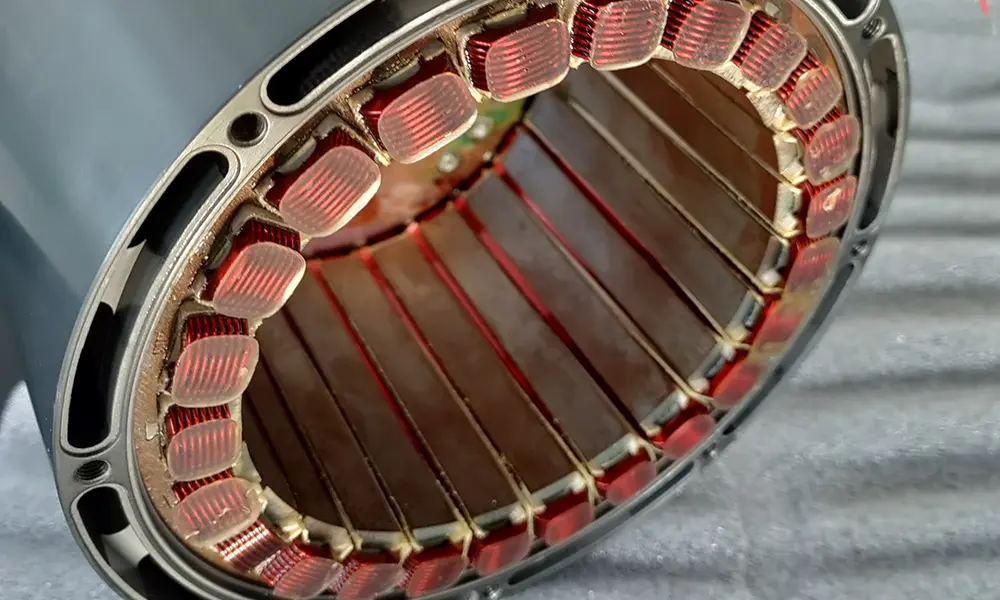
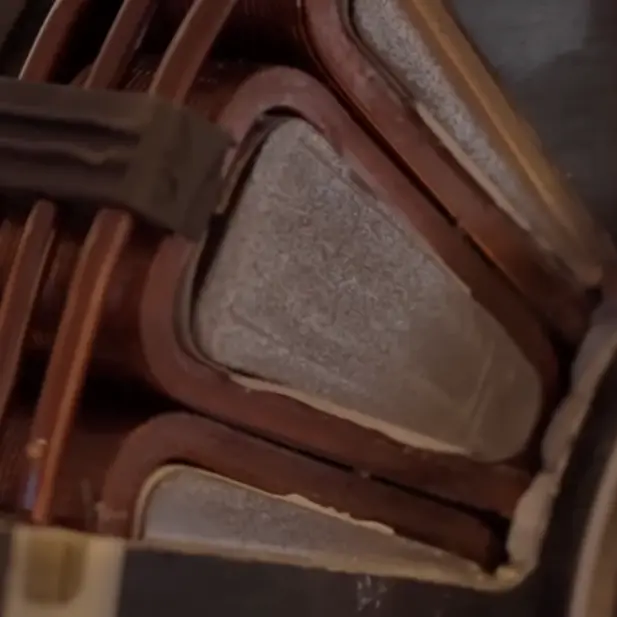
The fundamental difference between these motor technologies begins with the core material. Axial motors from manufacturers like YASA and Emrax typically use Soft Magnetic Composite (SMC) — a material that offers simpler production but lower magnetic permeability.
eMotres radial motors use Grain Oriented (GO) Steel, which requires more complex production methods but achieves significantly higher magnetic permeability — up to 1.9 T saturation. This directly translates to greater magnetic flux and higher torque density.
Manufacturing methods comparison:
- YASA: Pressing of SMC composite
- Emrax: Stamping of SMC composite
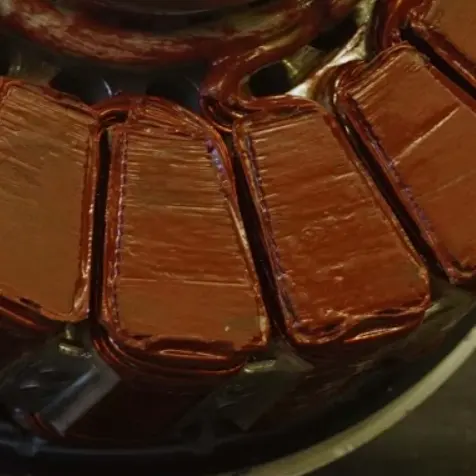
- eMotres: EDM cutting combined with stamping of GO steel
Winding Configuration
Axial motors present greater design complexity for coil fixing. YASA uses a plastic-top fixture, while Emrax employs an aluminum tube approach — which "significantly reduces the fill factor and increases eddy current losses."
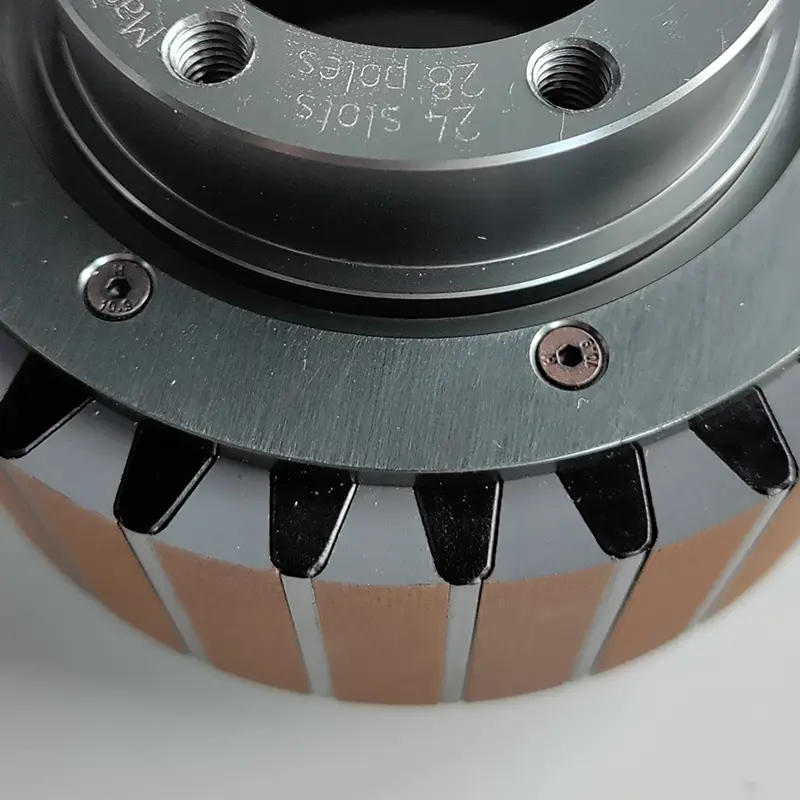
In axial designs, the whole wire participates in torque creation. However, the constraints of the axial geometry limit practical fill factor improvements. In radial inrunner designs with slot winding, eMotres uses rectangular copper wire to maximize fill factor and minimize resistance losses.
Magnetic Systems
Axial motors require segmented magnets with axial polarization, which necessitates bonding and special measures to mitigate eddy current losses. The segmentation adds manufacturing complexity and potential reliability concerns.
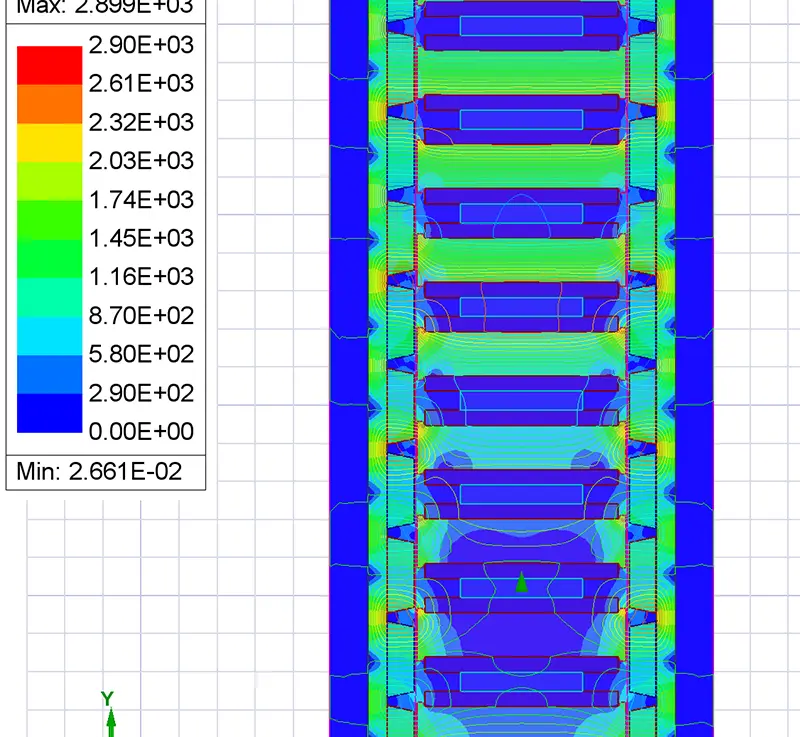
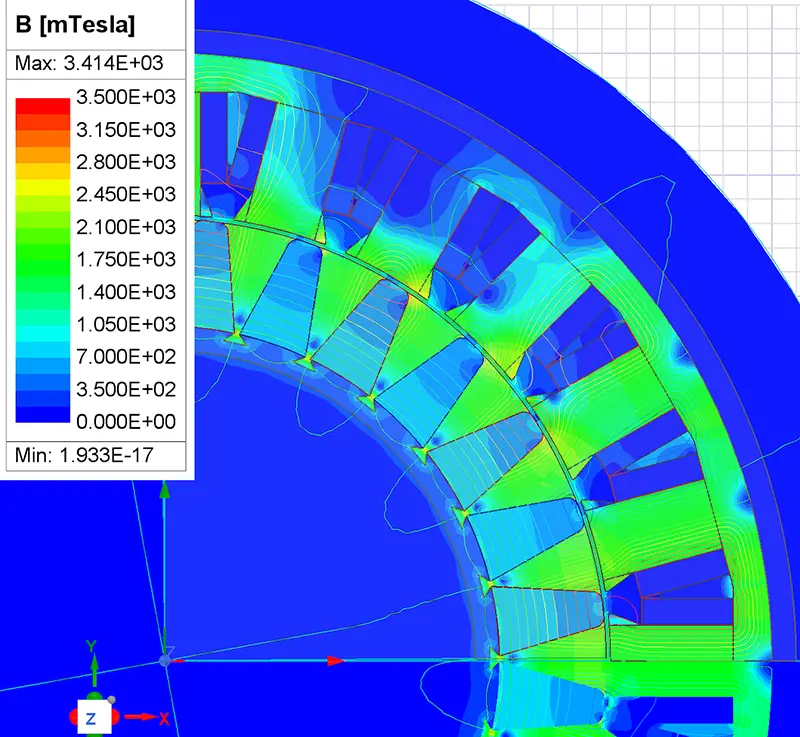
The radial inrunner approach employs tangential polarization magnets — a patented construction used in eMotres motors. This configuration produces a higher magnetic field while eliminating the need for magnet segmentation, reducing manufacturing complexity and improving reliability.
Tangential magnet polarization increases magnetic field strength by up to 1.5× compared to standard radial construction — directly increasing torque output for the same motor size and weight.
Key Findings
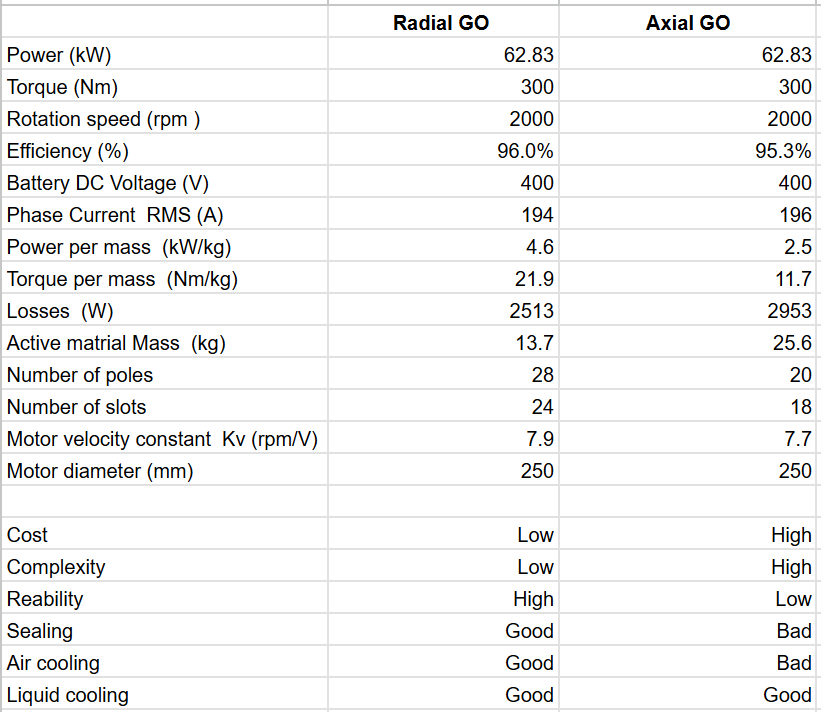
The performance analysis demonstrates that properly designed radial GO motors achieve comparable or superior efficiency to axial configurations, challenging the common industry assumption of axial motor superiority.
eMotres radial motors offer:
- ✓Higher torque density than equivalent axial flux motors
- ✓Greater efficiency through GO steel and rectangular copper winding
- ✓Lower manufacturing cost due to elimination of magnet segmentation
- ✓Better reliability with fully sealed IP65 housing
- ✓Simpler integration with standard FOC controllers
Conclusion
While axial flux motors have gained popularity in recent years, the data shows that radial motors with grain-oriented steel and tangential magnet polarization can match or exceed their performance in key metrics — while offering advantages in cost, reliability, and sealing.
eMotres motors combine all of these technologies in a single patented design, making them the highest torque density motors available on the market today.